
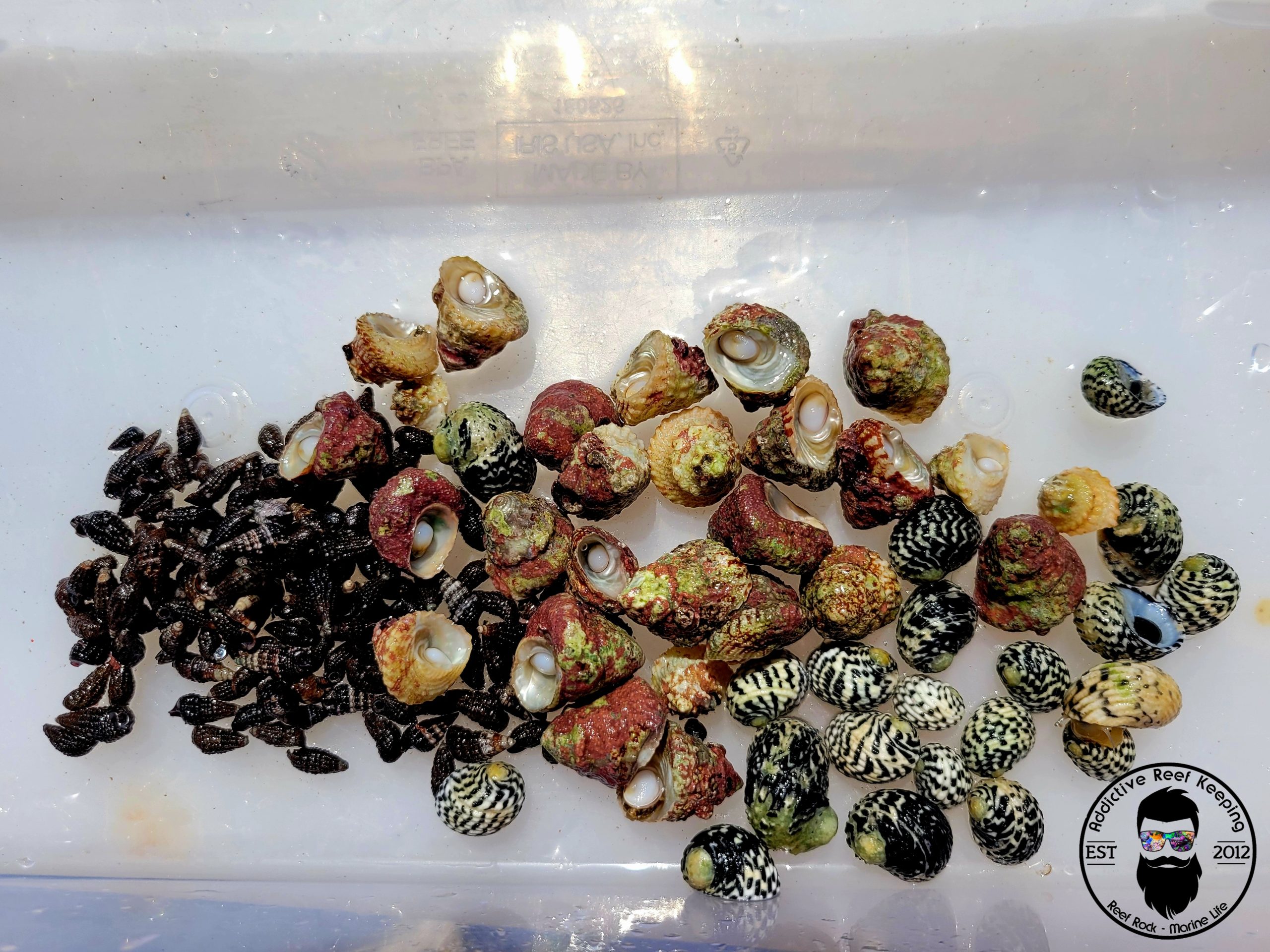
300x Triple Snail Mix Nerite, Turbo, Cerith Snail- Saltwater Algae Cleaner Astraea
$229.99
Ships FedEx Priority Overnight, Mon–Wed only
Covered by our Live Arrival Guarantee
From the farm
300 Pack of Astraea Turbo, Checkered Nerite and Black Cerith Snails You will receive a total of 300 snails 100x Astraea Turbo 100x Black Cerith 100x Checkered Nerite Quick Overview CERITH SNAIL Approximate Purchase Size: 1/2″ Scientific NameCerithium spp. Reef CompatibleYes Care LevelBeginner DispositionPeaceful Min. Tank Size10 gallons Mature Size1 inch Placement in tankAny DietOmnivore RangeEastern Pacific, Mexico, Caribbean Don’t let the Cerith Snail’s small adult size fool you. As well as having a gorgeous, elongated spiral shell, this active scavenger can consume large amounts of detritus, uneaten food, fish waste, and algae. Plus, this species of the Cerithium genus often burrows in your aquarium sand and helps maintain adequate oxygen levels in the substrate.Native to the Caribbean and Eastern Pacific off the coast of Mexico, the Cerith Snail does best in larger, well-established reef systems with deep sand beds. This voracious feeder is most active at night. In fact, breeding pairs of Cerith Snails will lay their eggs on your aquarium glass just after dark in long, stringy curves. However, since these eggs take a while to develop, they are often consumed by other tankmates or removed from the water column by filtration before the eggs have a chance to hatch. The Cerith Snail is extremely difficult to breed in captivity. Not only is determining the sexes difficult, but the water parameters required to do so are unknown. Like other invertebrates, the Cerith Snail is sensitive to high nitrate levels and copper based medications. It also requires a gradual acclimation process, preferably the drip acclimation method, since it is sensitive to even minute changes in water parameters. NERITE SNAIL These Nerite Snails are for saltwater aquariums only. They will not survive in freshwater aquariums. These Nerite Snails are collected from the Caribbean Sea in the western Atlantic Ocean and may include the Bleeding Tooth Nerite (Nerita peloronta), the Checkered Nerite (N. tessellata) and others. Nerite Snails (Nerita sp.) have smooth, round shells that are variable in color and patterns. These small snails are hardy algae eaters and are safe in reef aquariums. They will feed on filamentous algae, cyanobacteria, and diatoms. Most Nerite Snails stay fairly small and rarely grow to above 1.5 inches in length. Some species of Nerite Snails are from tidepool environments and may crawl above the water level; a lid on the tank is recommended. While some Nerite Snails are from freshwater or brackish water environments, those sold here are purely marine snails and cannot be tolerate freshwater ASTRAEA TURBO The Astraea Turbo Snail has a unique shell and a ravenous appetite for algae. Unlike many bottom dwellers that are dressed in drab colors to better camouflage themselves against the sand bottoms, Astraea tecta boasts a pyramid-shape shell with beautiful, olive green coloration. Since some individuals have projections on the shell that give it a star-like outline, the Astraea Turob is also known as the Astraea Star Snail or Astraea Conehead Snail. Though interesting to observe in your home aquarium, the Astraea Turbo Snail serves a greater function of cleaning algae-covered live rock. It is very adept at keeping your aquarium clean. In fact, this small herbivore prefers to feed on nuisance hair algae, as well as cyanobacteria and diatoms. Some aquarists also report that the Astraea Turbo Snail actually consumes the entire hair algae structure, which helps prevent immediate further algae growth. The Astraea Turbo Snail prefers well-established aquariums with ample hiding places and sufficient room to roam. In addition to eating algae off of your live rock, this member of the Astraeinae family will also clean your aquarium glass. However, the Astraea Turbo Snail is not known to be climbers like other smaller-shelled snail species. Care needs to be taken to observe the daily activities of this hungry snail since it has difficulty righting itself if it falls or is knocked upside down. Like other invertebrates,